Immersive 3D interior design studio
Rumiva
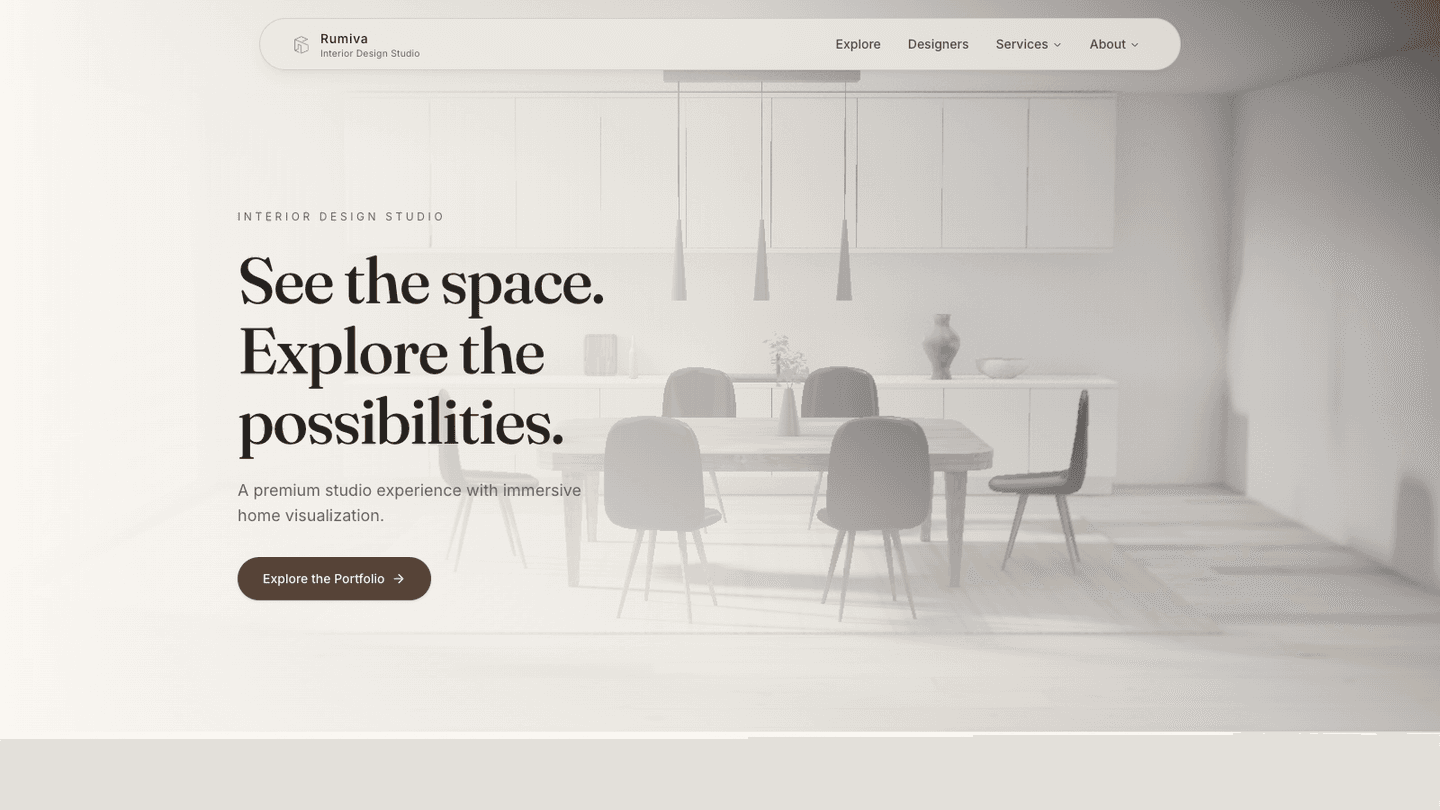
Interior design studio experience built for a 3D web hackathon — a React Three Fiber room you explore straight from the hero, plus designer portfolios, project galleries, and service pages tied together with GSAP motion and smooth scrolling.
Documentation
Rumiva
Interior design studio, rendered in the browser — rumiva.in
Built for the 3D Websites Hackathon, where the brief was aesthetics rather than problem-solving: make something that stops the scroll. Rumiva takes that at face value. Instead of a hero image of a room, the landing page is the room — a real-time kitchen interior you look around while the copy sits on top of it.
The hero scene
The centrepiece is a GLTF kitchen (adapted from the pmndrs shopping example)
running in React Three Fiber. Two decisions carry it:
- Budget. The source model is ~134MB. Run through
gltfjsxwith Draco compression it ships at 2.1MB — small enough to be a background element, not a loading screen. - No blocking CDN. The HDR environment map is self-hosted
(
/hdri/potsdamer_platz_1k.hdr) rather than pulled fromraw.githack.comon every visit, and it is applied only to the pieces that need it — chairs, sink, glass — instead of the whole scene.
Hovering a furniture group glows its outline and surfaces the product label, so
the scene doubles as a catalogue rather than being pure decoration. The
post-processing chain — N8AO, Outline, TiltShift2, BrightnessContrast,
HueSaturation, Vignette, ToneMapping — is what pulls it away from "WebGL
demo" and towards the soft, printed look the studio brand wanted.
WebGL cannot render on the server, so every scene is a next/dynamic import
with ssr: false and a text fallback. A machine without hardware acceleration
gets the full page and a prompt, never a blank canvas.
A viewer for every project
The hero knows its model's mesh names. Case studies can't — designers upload
whatever they have. ModelViewer is the generalized counterpart: hand it any
.glb, and it renders whatever scene graph ships inside, fits it to view with
Bounds + Center, and hands over orbit and zoom.
Scroll-to-zoom is off by default — a viewer embedded mid-article that eats the page scroll is worse than one you have to click into first.
Structure
Routes are organized by audience, using route groups so the section never leaks into the URL:
(marketing)— the landing page: 3D hero, stats band, services, process, gallery, FAQ, CTA(platform)— the public studio: designer profiles (designers/[slug]), individual project case studies (designers/[slug]/[project]), the projects gallery, service detail pages, about, contact(studio)— the signed-in dashboard, behind a session check(auth)— login and register
Components used by one route stay colocated in that group's _components/;
anything shared — ui/, providers/, three/ — lives in src/components/.
Stack
- Next.js 16 · React 19 · TypeScript
- React Three Fiber + drei + postprocessing — the 3D layer
- Three.js / WebGL, Draco-compressed GLTF
- GSAP and Motion for sequencing, Lenis for smooth scroll
- Tailwind CSS v4 + shadcn/ui on Base UI / Radix primitives
Running it
npm install
npm run dev
The dev server binds to port 3001 — http://localhost:3001.
Keep exploring
Related work
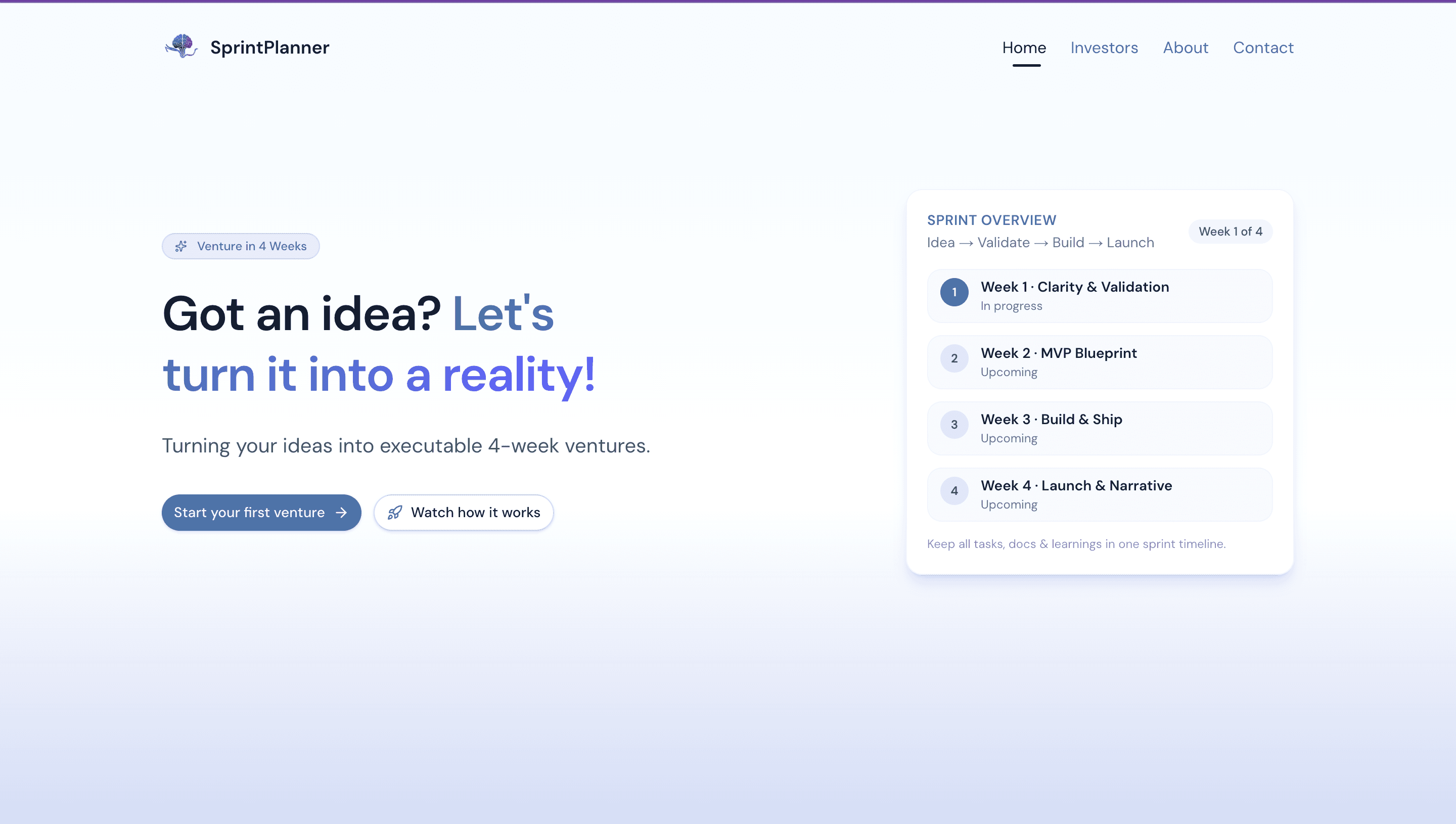
SprintPlanner
Turning your ideas into executable 4-week ventures.
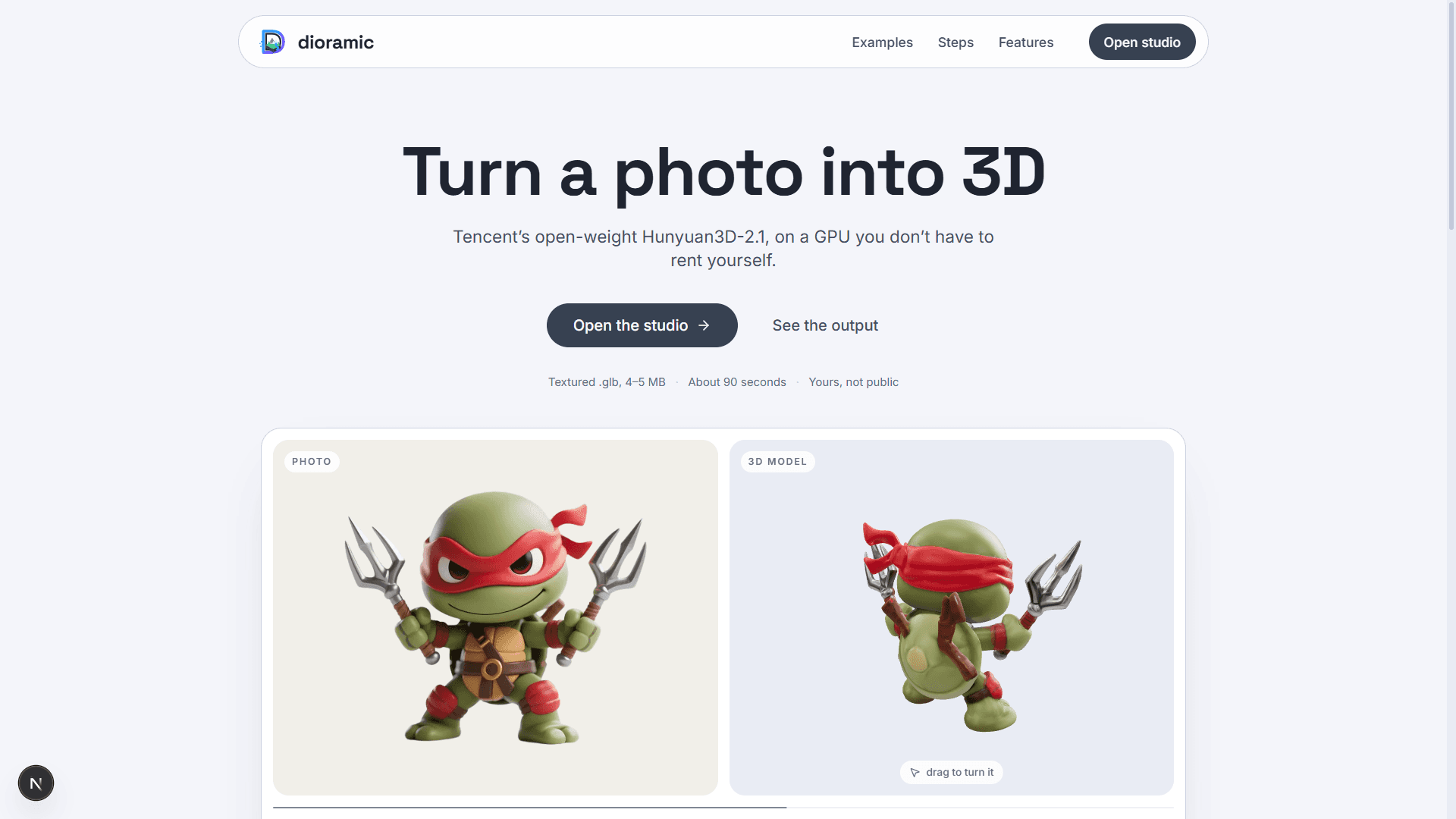
Dioramic
Photo-to-3D web app — upload a picture and a rented GPU turns it into a textured mesh, private to your account. Runs open-source models (TripoSR, Hunyuan3D-2.1, GroundingDINO) on Modal, with photos and meshes in Vercel Blob and every run tracked in Neon Postgres.
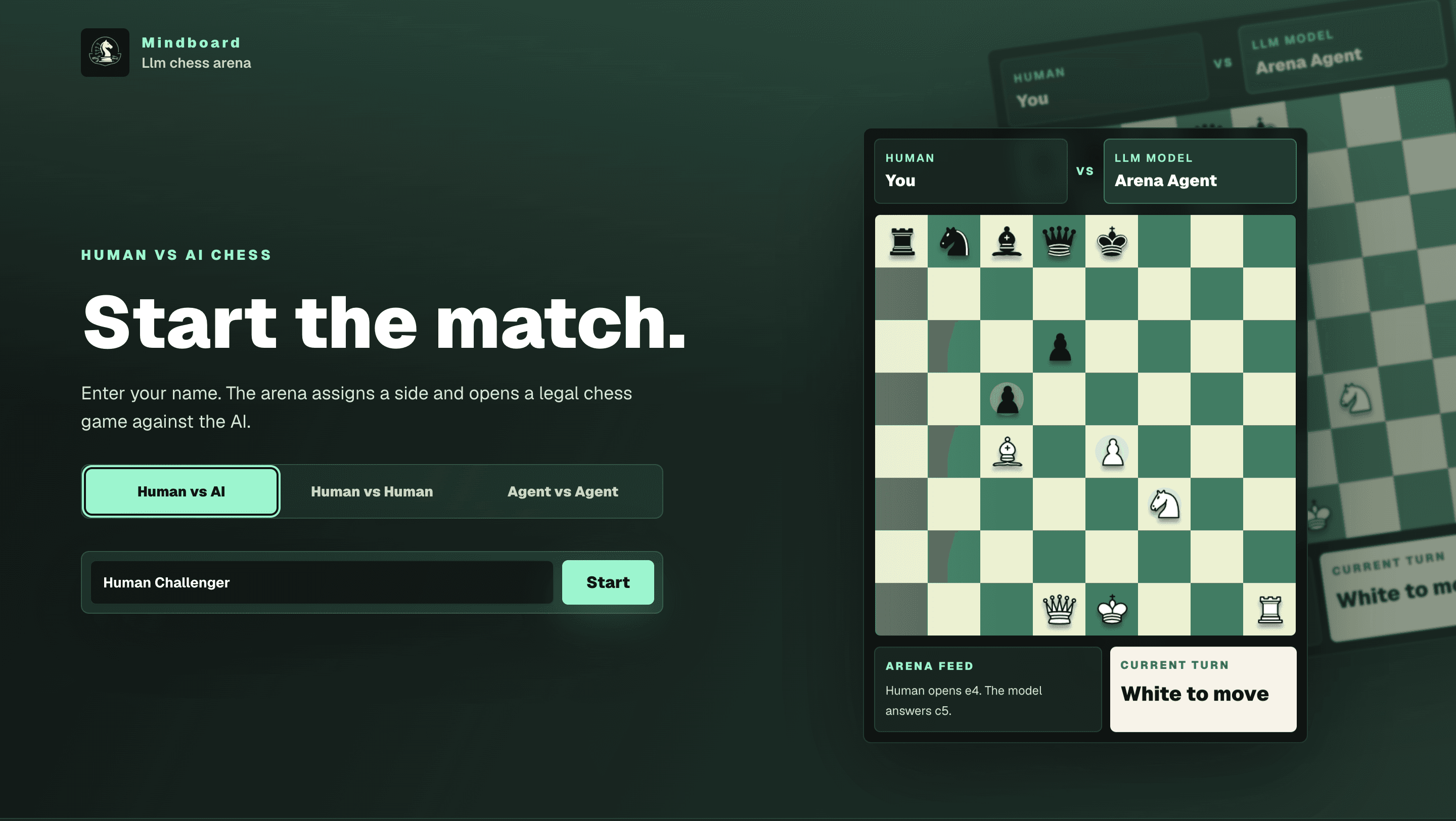
MindBoard Arena
Stateful chess arena where language-model agents reason through the board instead of running engine lines — Human vs AI, Human vs Human, and Agent vs Agent modes with persisted games, move history, and match logs.